Most times, farmers or intending farmers think about land, capital, breeds, disease control, vaccination, farm structures and other requirements that they look at as more important than others. However, to the contrary, research and experience show that the most valuable and important resource of all, the human resource is given little attention.
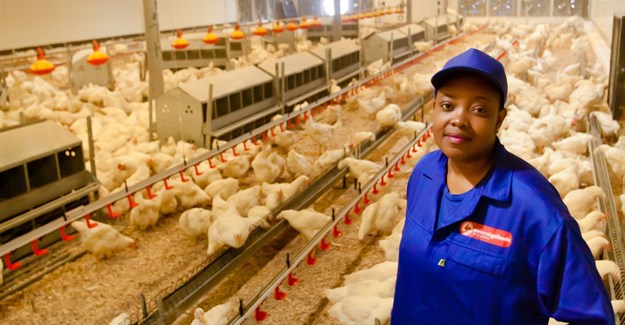
As farms grow in stock and other operations, the owners can no longer rely on family members as source of unskilled, semi skilled and skilled labour. Before one knows it, they need to employ and manage 10 employees and the years go by, the number keeps on increasing.
Employing the right people on the farm is one thing, and effectively managing them is the other. The key skills and tips to manage these employees make a difference between a failed farm and
a successful farm.
The following are the skills, expertise and strategies to effectively manage employees on your farm:
Also read: 8 Best poultry feeds in Nigeria with their prices for optimal birds' growth
1- Good communication mechanism established to communicate with the manager or other concerned person on the farm to tell the employer on what is going on. In the current situation, whatsapp, sms and phone calls have eased everything and failure to effectively communicate causes challenges.
2- Establish chain of command at the farm. Let there be a known person who makes phone calls, who reports, sends messages and not every Dick, Tom and Harry on the farm who has the phone number of the boss.
3- Streamline the salary, allowances, bonuses if any. There should be clear specification of salaries, ways of earning or getting added salary, bonuses and allowances, if any. These help the employees to plan well.
4- If possible, have written down contracts. These can be drafted in a language well understood to the employee. Better that this be put in his or her local language especially for the semi-skilled and unskilled workers. This helps to avoid conflict in future.
5- Clear responsibilities to each worker. It is better for employees to know their respective roles and responsibilities especially where one has more than one employee. This makes it easy to get a good record of how each one is executing their duties.
Also read: 8 Things I wish I’d known About Poultry farming. Don't neglect No 7
6- Let there be good relations, PR with community/ neighbours of the farm as source of security, market, good will for people and animals/crops on farm. Employees on the farm should not hold conflicts or poor working relations with neighbours on the farm. This is detrimental mainly to their employer as his image and security for the farm are put on stake.
7- Access to current affairs. Employees need to be moving with what is happening around them in the community, district, country and if possible globally. No one wants to keep employees say who have no idea about how far issues of Covid-19 have reached, voting process in their community, and other information. A radio may serve this purpose.
8- Surprise rewards for work done well, say end of year, end of season party, games like football if they like and freely mingle with them. This helps them relax, refresh minds, feel appreciated and hence motivated. The employer may gain a lot during this free session. This could happen once or twice a year and does not need to be exaggerated in scale and cost.
9- Let farm employees taste on farm crops and or/animals. If farm is for crops or animals or both, let the workers occasionally taste/on the products and they enjoy. This motivates them and they own the products and feel they are not only employees but also beneficiaries on the farm.
Egg train for harvesting eggs
10- Eat and share with employees while at the farm. It creates team spirit, narrows gaps when the employer shares with employees on the farm rather than bossing around while with them. This is very beneficial and narrows the gap between the two sides.
11- Don’t always notify them when coming or don’t have specific days you are known to visit the farm. It is not a good management practice to notify employees, who know what to do on a day-to-day basis on when you are coming to the farm or have days say saturdays when you come to the farm.
Better to come unannounced in evenings, mornings, afternoons or days of the nearby open market but with no clear schedule. When announced or scheduled, the reality on the farm may never be known to the employer, even for years.
12- Empower them and show them how things are done and introduce them to the farm culture. Let employees be given induction, onboarding sessions especially the new ones on how things go on the farm plus key components of the farm culture right from the word go.
Also read: 10 ways to sell and market your broiler chickens fast that are proven to work
13- Avoid policing and micromanagent on the employees. Employees don’t feel comfortable when their employer follows up on small details, small personal things especially when they are not concerned with his job or conduct at work. Therefore, a certain degree of free personal space left for employees can do for them.
14- Understand their personal issues (has lost a close relative, his wife is in labour, an employee has a wedding, their sick parents, his kid hospitalized for last one month). During this time, employees need support and assistance of their employers especially moral comfort, financial support, free day or days as they feel cared for.
15- Avoid employing people because they are friends and relatives. Look for skills, competence, trustworthiness and capabilities. Research indicates that more than 60% of friends and relatives employed on farms either disappoint their relatives or cannot develop these farms at all as they see it as a family enterprise, but not a commercial establishment.
16- Let them know who will give them instructions (not everybody wife, son, your uncle, your sisters, coming to the farm to give employees instructions.
17- Have a clear vision and make every employee understand it and work in that line. The plans for development of the farm in year, two years, five years should be explained to the employees so that they work to contribute to the vision and mission.
18- Let them have what to use to do your work. The employer should give the equipment, internet (if needed), the farm equipment, protective gear, for them to perform their work.
19- Telling the truth but not telling you what you want to hear. A culture of truth telling should be inculcated among employees and not telling what the employer or manager wants to hear. If the animal fell in the river due to carelessness, let this be told but not lying that it was pushed by another animal.
20- Guide them on how to use their salaries profitably and build or buy something but not wasting. As much as salary earned belongs to farm employees and not their employer, it’s good to talk to them cordially on how to earn it and it helps them buy belongings, land, build a house.
Modern Commercial broiler Farm
21- Having a work schedule, working and resting time. Employees have a right to have time to work and time to rest. Don’t make them work like machines without resting as resting is their right.
22- Employees not feeling indispensable or holding you at ransom. An employee should not feel they are special and should enjoy a special treatment on the farm on the account that they are older than others, have been there longer than others. This is detrimental as this could be used to hold the employer or manager at ransom in form of demanding salary increases or other favour.
23- Get to the bottom of how manager handles the lower staff, be keen & use objectivity. As much as the farm manager is the one normally communicates with the employer, it is the sole responsibility of the manager to find out especially during formal meetings with employees or otherwise. Some managers tend to give wrong reports to bosses, blackmail lower employees so that they are terminated and he brings his relatives or puppets who will be yes men and women to him.
24- Handle problems/conflict/disagreement on time. Don't leave them to accumulate. Whenever there are conflicts on the farm, amongst employees or with the outside community, the employer should intervene as quickly as possible as this can put lives, animals and other property at risk.
25- Let new workers fulfill protocols set by authorities (introduction to leaders, local authority letters, copies of ID, recommendation from previous area of residence…). If these are required, let new employees supply them as they benefit the employee, the community and the employer.
26- Let the farm be seen as mutually beneficial (to you and them), but not exclusively beneficial to you alone. Let there be a culture of seeing the farm as an ecological niche for the employee and employer and let it be clear that success of the farm is a score for both while failure makes both sides lose too. This develops a sense of commitment, ownership and hard work and to do extra. This is called a Psychological contract.
Chicken meat Factory
27- Clarify issues of sickness and cost for treatment, training and capacity building, accident on farm and in line of duty, accident at work, annual leave, whether personal protective Equipment (PPE) are available, face masks, and so on say during this period of Covid-19. Make sure these are clarified right from the start.
28- Employee recognition, being valued, respected, being trust among workers and with boss. These are very key virtues and when they are not there, everything on the farm starts going wrong.
29- Salary and other benefits matching productivity, market rates, inflation rates. When salary is not researched and matched with these, it ceases to be useful and motivating and hence a worker will not be productive anymore.
Also read: Poultry vaccination and schedule for Layers and Broilers
30- Stick to your word. It is better to practise what you say. Let what was agreed in contract negotiation, at appraisal and meetings with employer or manager be fulfilled. This will build confidence in the farm employees, hence improved performance.
31- Forgive workers; give them second chances on minor errors and minor indiscipline. It is important to note that not all errors, mistakes and omissions will be punished as these are human beings. As long as these are not grave, not repeated or done with intent, most of them can be forgiven, an employee guided and given second and third chance as they are human beings like you.
32- Fair working conditions. Let the working conditions like the animal pens, the shade for resting, where workers sleep, the workers house all be conducive environments to encourage them work well but not a dirty place where occupational diseases and other hazards will take advantage of them.
33- Job security, don’t use threats on employees, don't show them it is a favour that you employed them. These will make employees settle and do your work with one heart.
34- Practise Job rotation, retention strategies and succession planning. Rotate workers from one section or department to the other. This helps them break boredom and monotony, increase motivation and performance and also acquire different skills to be able to replace others in case one is away, resigns or dies.
35- Periodic meetings with team and individuals. Employers need not to overlook the role of monthly, quarterly, semi-annual and annual meetings with individuals and teams to discuss progress, review performance and decisions taken vis-à-vis the previous meetings and targets. This ends in rewards, promotions, salary increases, parties….
36- Handle employee error or mistakes well and respectfully, don’t blame or apportion responsibility as this discourages and traumatizes them.

37- Employees don't need to know all your itinerary and movements. Let them know only necessary things at the right time.
38- Part ways/separate well with employees and on a good note. Since employees must reach a point and they go, all outstanding dues, allowances and benefits if any should be cleared when they are leaving as the employer needs them and they too need it at some point.
39- Exit interviews or discussion. Whenever employees are leaving the farm by retiring, resigning or otherwise, it is to the benefit of the employer that he gets to the bottom of the reason why they are leaving. This helps him in designing solution and staff retention measures before things get worse.
40- Do a survey in case the turnover is high. Use an external/neutral person as an internal person or the employer himself won't be told the truth by current and former employers.
By and large, some turnover is natural and healthy; after all, employees are not your children or assets. Even children reach a point and leave parents houses and compound. As much as managing them well to retain them is the ultimate, they reach a point and leave and others enter. What matters most is the experience, the interaction, the contribution they made and the relationship they had with the employer during the time of employment. Therefore, a turnover rate of below 10% is natural, healthy and justifiable.
This Article was Contributed by: JARON MIXED FARM
Please comment and share !
Need a website or other IT services? Visit our website!
Share on Twitter Share on Facebook
Comments
There are currently no comments
New Comment