What to put in a chicken open wound are found in your chicken aid kit, and the use of these medicines depends on the severity and type of wound, such as burn wound, new wound, surgical wound, old wound, etc, however, if these medications or the chicken first aid kit are not readily available you can as well use some potent herbs or plants you can find around your house until you find a proper treatment.
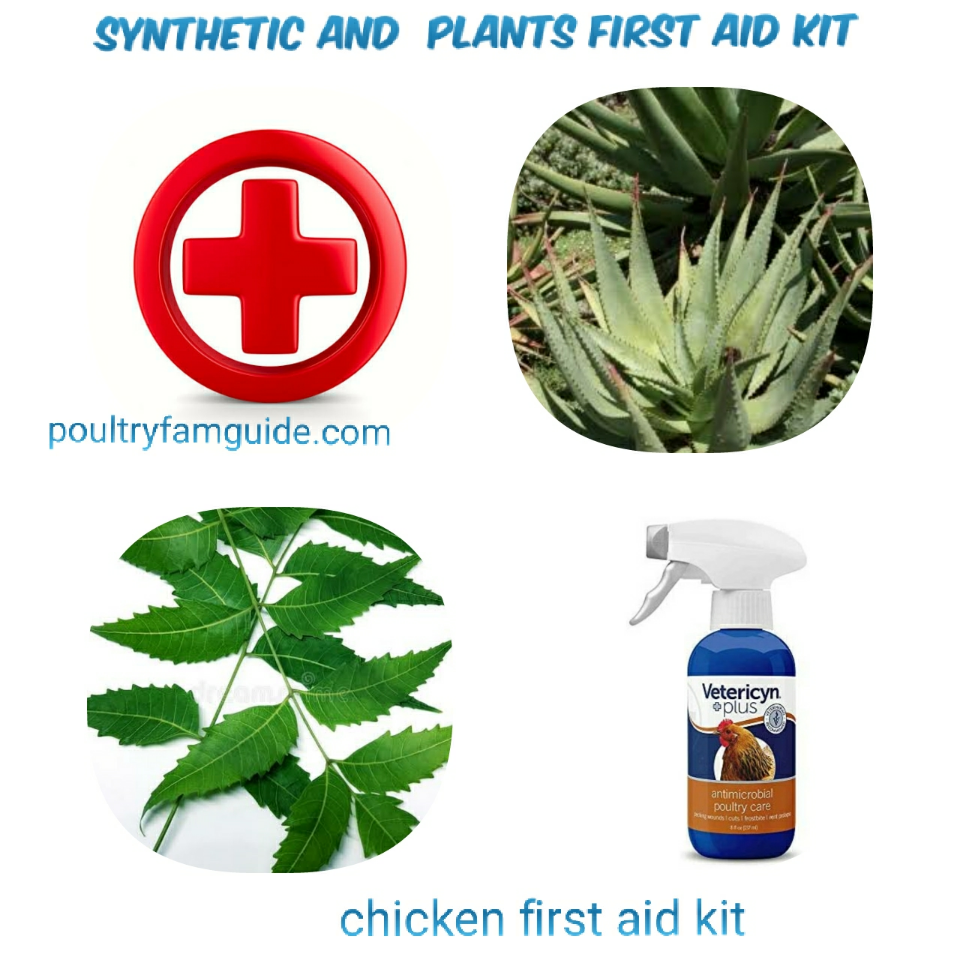
I am going to show you some potent plants or herbs you can use to treat wounds in chickens. Moreover, most medications or plants using in wound healing in humans are also effective in healing chickens’ wounds
It is worthy to note that having the right medication supplies in your chicken first aid kit is as important as having a sick bay or a separate place for your injured or sick chicken.
This will encourage speedy recovery and healing. Leaving your wounded chicken in the flock will not only worsen the situation but will also trigger cannibalism which is a bad vice among chickens-recall, chickens are attracted to the red color of blood and as such will want to peck out of curiosity
Let us look at chicken first aid essential items
Also, read; How to cure paralysis in broiler chickens for full recovery
What should be in a chicken first aid kit?
A chicken first aid kit could contain several medications and still will not contain disinfectant. It is like getting all food items from the grocery and forgetting salt, what is the need? So, it is pertinent you know the chicken first aid essentials.
Here are some of them;
- Vetericyn Plus Poultry care spray
- Vitamins and electrolytes
- An eye dropper or syringe
- Vetrap
- Epsom salt- for soaking feet before bumblefoot treatment
- Non-stick gauze pad
- Disposable glove
- Aspirin (not baby aspirin)
- Scissor
- Neosporin ointment
- An LED Headlamp
- Styptic powder (for bleeding nails/beaks)
- Nail clipper (harder one like dog nail clipper)
- Chlorhexidine 2% solution (antibacterial, antifungal cleaning, and sanitizing
solution
- Prozyme- digestive and nutritional support for ill chickens not eating normally

Epsom salt
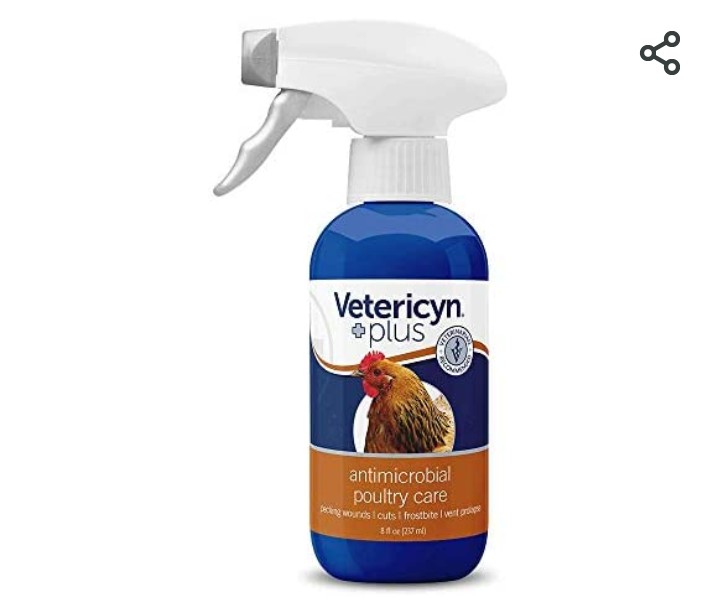
Vetericyn Plus Poultry
Natural remedies for chicken wound healing
We all know that a chicken first aid kit is uncommon among some chicken keepers. Those that have may not have the essentials. What do we do in the absence of a chicken first aid kit? This is where natural remedies like plants, herbs, honey, egg membrane come into play.
Let us see some of these natural wound healers mostly found in Africa ;
|
Plant |
Botanical part used | Common name | Type of wound | Country of origin |
| Acacia Senegal | Root | Gum Arabic | New wounds | Nigeria, South Africa |
| Aloe Ferox | Bark | Bitter aloe | Burn wound | Nigeria, South Africa |
| Agathosma betulina | Leave | Buchu | Open wound | South Africa |
| Azardica indica | Seed |
Dogonyaro (Neem) |
New wound | Nigeria, West Africa |
| Hypoxis hemerocallidea | Leave | Africa potato | Wound heal | Mozambique |
| Pelargonium sidoides | Leave | Umckaloabo | All wound | Senegal |
| Moringa oleifera | Leave | Miracle tree | New and old wound | Nigeria |
| Parkia biglobosa | Leave | Iru | Chronic Wounds | Nigeria, Mali |
| Sutherlandia frutescens | Leave | Petola | wound heal |
Nigeria, Namibia, Malawi Botswana, Namibia |
Some indigenous Africa plants used for wound healing in Traditional Africa Medicine (TAM)

You can plant two or more of these potent plants in your backyard farm for easy reach in case of an emergency.
Also, read: 6 smart tips to increase the bodyweight of your broiler chicken
Sick Bay for Chicken
When do you think it is necessary to set up a sickbay?
A sickbay should always be part of your plan for any batch of production because nobody knows when an accident will occur. Thus, you should always be on guard against any farm accident. If you don't make provision for a sickbay, you might be forced to treat your injured chicken among the flock which could be disastrous to the chicken and to the rest of the flock. Therefore by having a sickbay, you can easily transfer your wounded chicken to the sickbay for proper treatment and care.
Also read: Poultry vaccination and schedule for Layers and Broilers
What should be in a chicken sickbay?
An average sickbay should have enough space for the chicken to move around, is accessible for cleaning, and a spacious enough for food and water apart from where it can relieve itself. It will be more comfortable if the place is dimly lit, quiet, and a little warmer than the place the chicken was accustomed to outside. There are so many options for a sickbay. I prefer using a carton to set up something like a mini brooder with lamplight or a rabbit cage.

LED Headlamp
Caring for sick chickens
Any time you have a sick or injured chicken, the chicken must be kept separately from the flock until the injury is completely healed to avoid further injury, possible spread of a contagious illness, cannibalism, and death. The recuperating area should be a safe, quiet living space where they will remain until they are fully healed.
Also read:: 8 Things I wish I’d known About Poultry farming. Don't neglect No 7
Returning injured chicken to the flock
1. The injured chicken should be 100 percent healed with no visible sign of blood or scabbing before you return it to the flock. ( Do not cover it up with a purple dye product is not an acceptable substitute for time and complete healing)
2. Reintroduce the injured chicken like a stranger to the flock. What I do is that I place the resurgent chicken in a separate pen where they can see one another but not allowed to interact, in that way they will gradually familiarize themselves with the resurgent chicken without any fight or bloodshed.
Please comment and share!
Need a website or other IT services? Visit our website!
Share on Twitter Share on Facebook
Comments
Kingsley 4 years, 2 months ago
None
Link | Replybut thanks for the new knowledge
Muhammed Awal 4 years, 2 months ago
I like this,
Link | Reply&l want to be train
Sumaila Noah 4 years, 2 months ago
Am intereste in this
Link | ReplyNew Comment